
Science · Discovery
Polarizing microscope
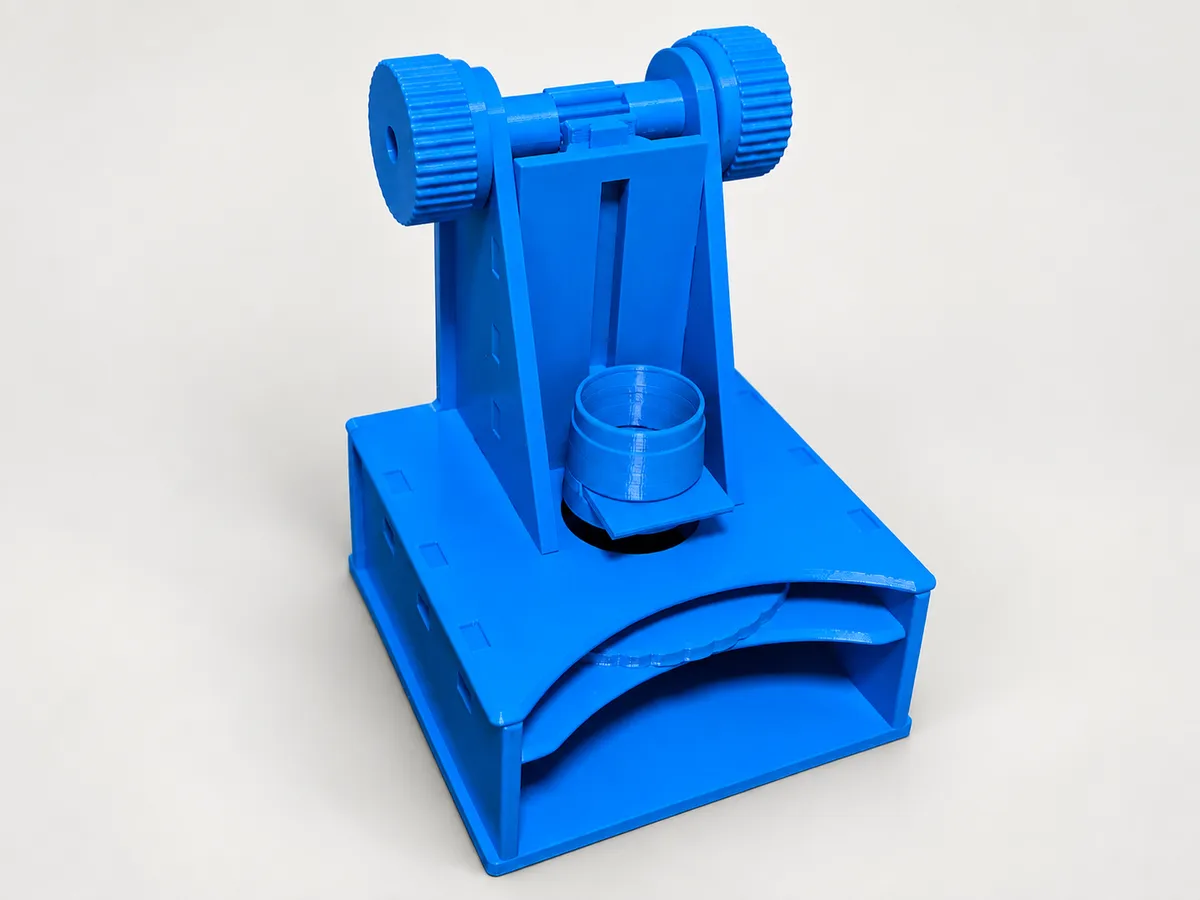
Designed and developed for a geology professor, this project is an inexpensive, field-ready stand that turns an off-the-shelf USB microscope into a portable polarizing microscope. The 3D-printed stand adds a rotating stage with degree markings, built-in backlighting, and removable polarizers, and the USB microscope shows and records images on a connected computer or phone.
Why polarized light matters in geology
Geologists identify many minerals by how they interact with polarized light. With one polarizer, a mineral’s color, shape, cleavage, and relief stand out, and some minerals change color as the sample turns, a property called pleochroism. Adding a second, crossed polarizer reveals what ordinary light can’t. Minerals that split light into two rays, known as birefringence, show characteristic interference colors, while others stay dark. Twinning and other internal features also appear.
That is why the rotating stage matters. As a grain turns between crossed polarizers, it goes dark at particular angles, called extinction, and its colors shift. The degree markings let those angles be read and compared, one of the clues that separates minerals that otherwise look alike. Together, these clues help tell apart common minerals such as quartz, feldspar, and biotite in thin rock slices and loose grains.
Taking it into the field
A traditional petrographic microscope is a precise laboratory instrument: expensive, heavy, and built to stay on a bench. Samples usually travel back to the lab before anyone sees them under polarized light. A portable, low-cost stand built around a USB microscope is meant to bring that first look closer to the outcrop: checking sand and crushed-rock grains, helping decide which samples are worth collecting, and giving students hands-on practice without risking costly equipment. Because the camera already connects to a computer or phone, images are easy to capture, share, and compare.